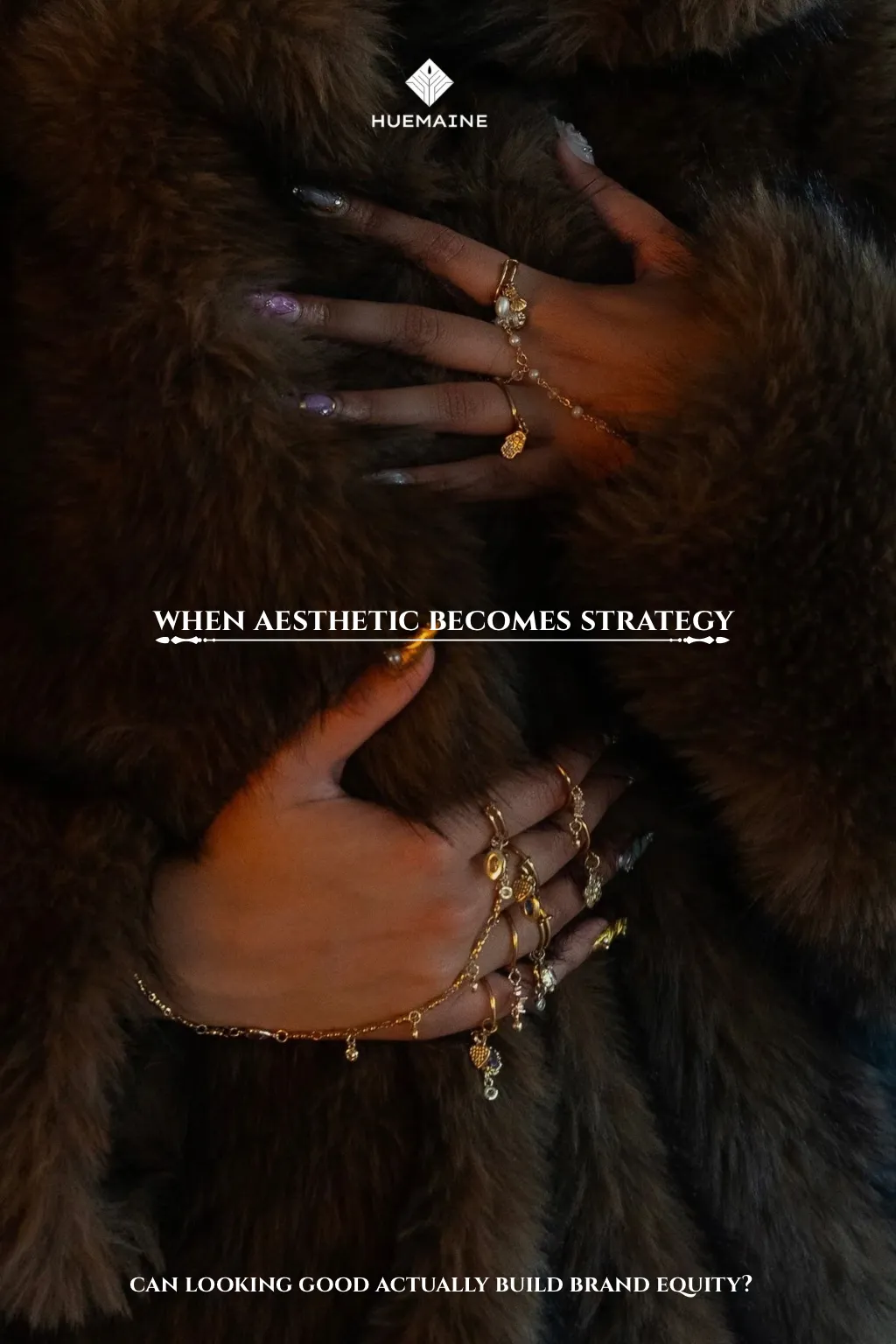
When Aesthetic Becomes Strategy
We live in a time where almost every brand wants to look good. The moodboard is perfect. The colours are intentional. The packaging is aesthetically pleasing. The feed is cohesive.But here is the question we don’t ask enough: “Does looking good actually make a brand valuable?”
The short answer is no. Not on its own.
Aesthetics can get you noticed. But strategy is what gives people a reason to remember you. For years, branding was often treated as a logo, a colour palette and a nice-looking campaign. Today, we understand that a brand is much bigger than its visual identity. It is what people recognise before they see the name. It is what they associate with you. It is the feeling they expect when they encounter you. That is when aesthetics become more than decoration.
It becomes a brand code. Think about the brands you can recognise without seeing their logo. You know the colours. You recognise the typography. You understand the tone. You can almost predict what their next campaign will feel like. That is not simply good design. That is consistency creating recognition. And recognition creates memory. For African brands, this becomes even more interesting because we are operating in incredibly visual markets. Lagos alone is a constant collision of fashion, music, architecture, street culture, beauty and digital culture. There is no shortage of visual inspiration. The challenge is not finding something beautiful. The challenge is finding something distinctive because when everyone has access to the same Pinterest boards, the same fonts, the same editing apps and the same visual trends, looking good is no longer a competitive advantage.
Being recognisable is. A brand should not simply have an aesthetic. It should have a point of view. That point of view should influence everything: how the brand photographs people, how it designs its spaces, how it writes captions, how it packages a product, how it collaborates and even what it chooses not to do. This is where design starts working as strategy. The colour is no longer just a colour. The typography is no longer just typography. They become signals. Together, they create a world that people can recognise and eventually associate with a specific feeling. And that association is incredibly valuable. Because in crowded markets, people don’t always remember the brand with the best product. They remember the brand they can recognise instantly.
But there is another layer. A strong aesthetic should not only make people recognise a brand. It should make the right people want to be associated with it. This is where identity comes in. People use brands to communicate who they are, what they value and sometimes who they want to become. So when a brand has a strong visual and cultural point of view, choosing it can become a form of self-expression. That is the difference between “This looks good” and “This feels like me.” The first gets attention.The second builds equity.
So yes, aesthetic matters. But beautiful is not the strategy. Meaning is.
The strongest brands understand that design is not there to decorate the strategy. Design is one of the ways the strategy becomes visible. And when the two work together, a brand doesn’t just look good. It becomes unmistakable.
Nelo Okpala