The Taste You Inherited
Before taste becomes a choice, it is an inheritance.
Long before we know how to describe what we find beautiful, sophisticated or desirable, we are already being introduced to it. It arrives quietly through the home we grow up in, the things our parents value, the food served at the table, the music playing in the background, the way people dress for occasions, the places we are taken to and even the things we are taught to consider inappropriate. We eventually call these preferences our own. But how many of them did we actually choose?
The house teaches us what a beautiful room looks like. Family teaches us what belongs on a dinner table. School introduces certain books, references and ways of speaking. Geography determines what surrounds us. Our social circles expand or narrow the cultural worlds available to us. Over time, these exposures accumulate into something that feels remarkably personal: taste.
This is what makes taste so interesting. It rarely announces where it came from. Someone may prefer clean interiors to ornate ones, jazz to Afrobeats, linen to heavily embellished clothing, or a quiet restaurant to a crowded one. These choices can feel instinctive, even obvious. Yet what feels obvious to one person may be completely unfamiliar to another. Neither preference arrived untouched by the world. What we inherit is not always an object. Sometimes it is a way of seeing. We inherit ideas about what is elegant, what is excessive, what is respectable, what is common and what is worth wanting. We inherit references, rituals and distinctions. We inherit the ability to recognise certain things as valuable because we were exposed to their value before we had the language to question it.
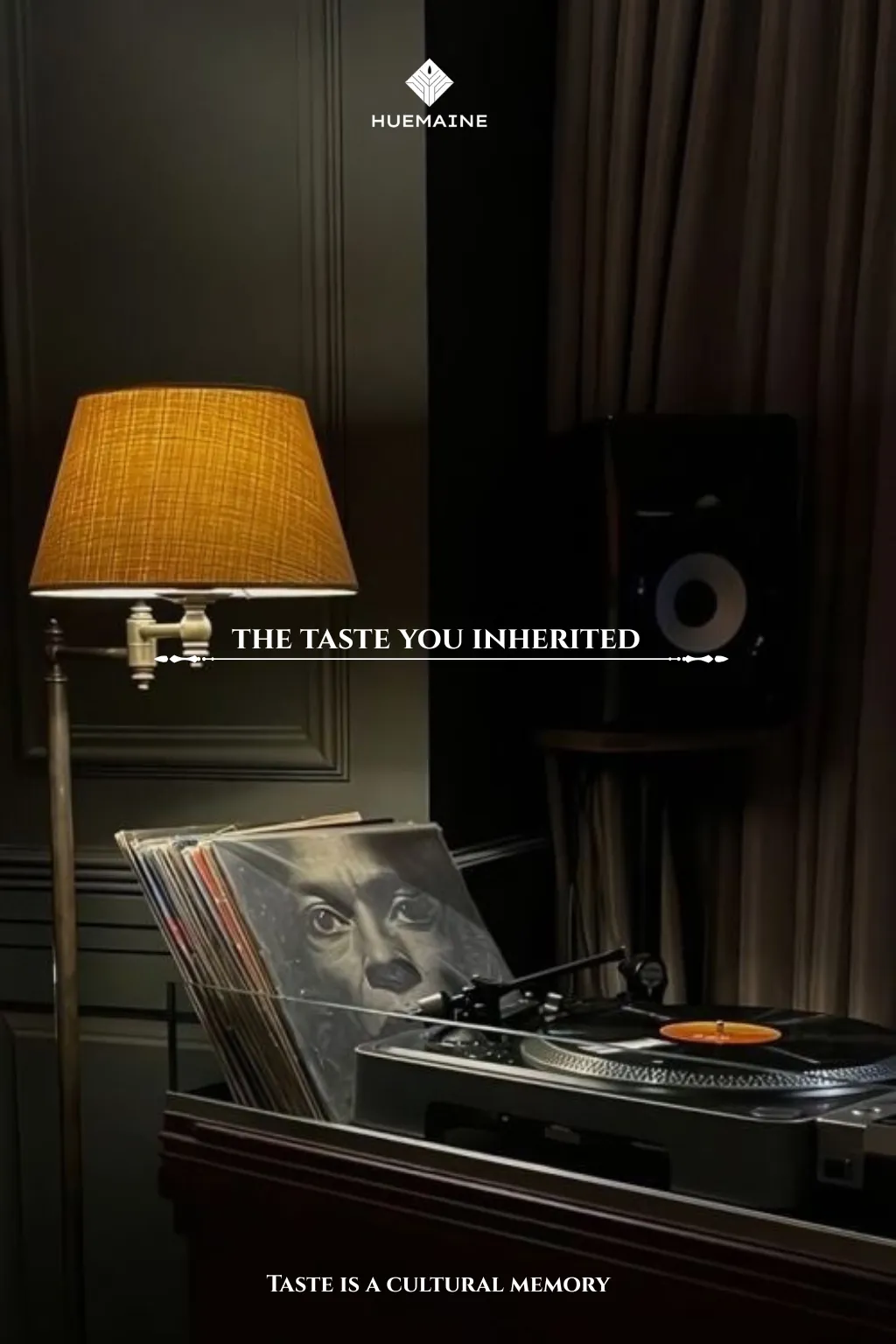
This is where taste becomes more than aesthetics. It becomes a cultural memory. Which is why some forms of taste feel effortless. They have been rehearsed so early and so often that eventually there is nothing to rehearse. We simply know what feels right. The interesting question, then, is not whether taste is personal. It is. The more revealing question is where the personal ends and the inherited begins. Because taste can be intimate without being entirely individual. We can inherit a preference and later make it our own. We can reject what we were taught. We can encounter another culture and discover an entirely different definition of beauty. We can move between worlds and accumulate new references, allowing our taste to change with us.
Refinement is not simply knowing what to like. Perhaps it is knowing where what you like came from. To understand your taste is to understand a small history of yourself: the rooms that raised you, the people who influenced you, the places you have seen and the worlds you have been allowed to enter. What we call taste may be personal. But it has a genealogy.
Nelo Okpala