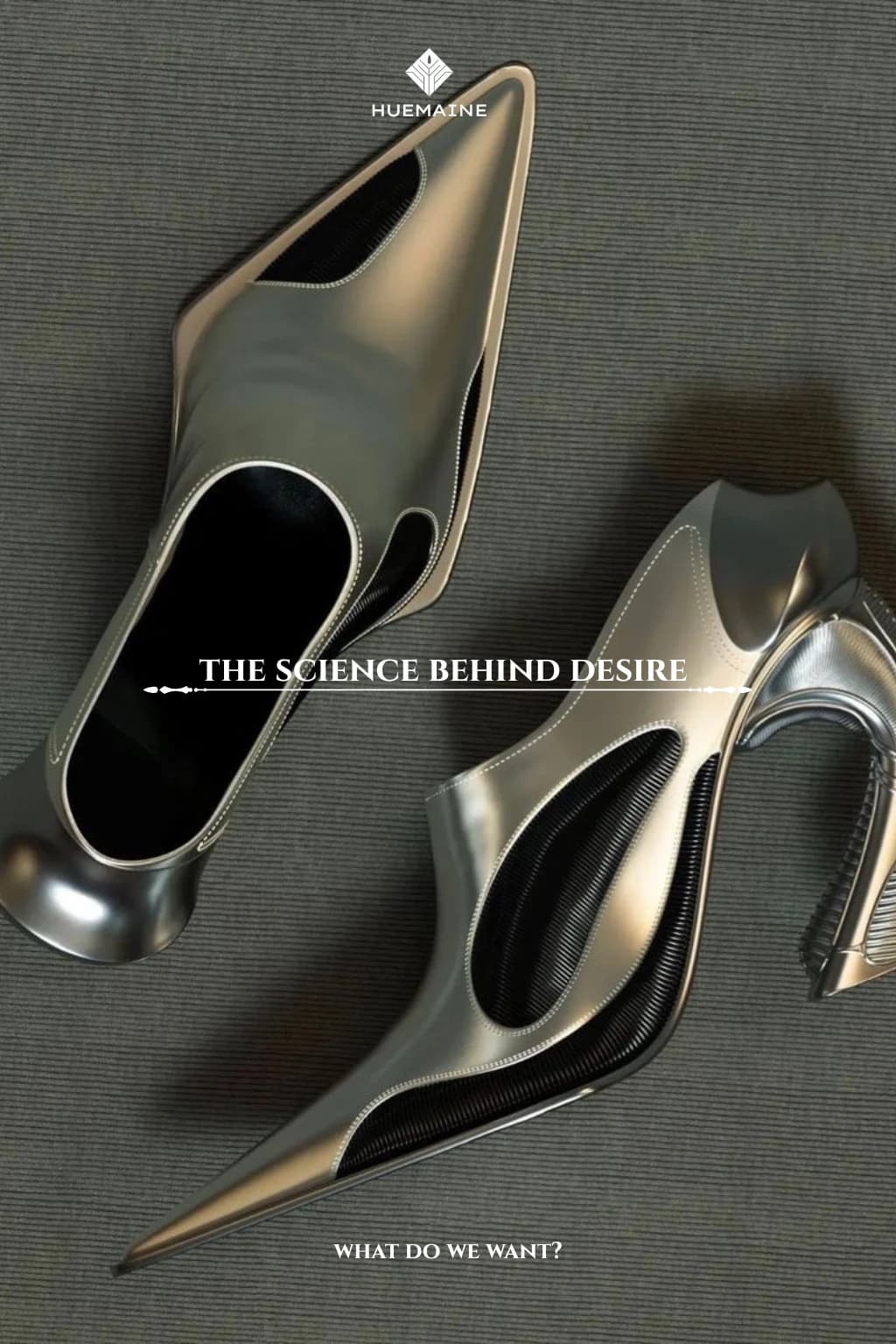
The Science Behind Desire
There was a time when desire was understood simply as wanting more. More wealth. More status. More possessions. More recognition. It was treated as a force to satisfy rather than a phenomenon to understand. Success, in many ways, became synonymous with accumulation, and desire was viewed as the engine that kept the pursuit alive.Today, that understanding is beginning to evolve.
As conversations around luxury become more nuanced, so too does our relationship with desire itself. We are beginning to recognise that desire is not merely about acquiring objects, but about pursuing meaning. Behind every aspiration lies something deeper than the product we seek. Every purchase, every ambition, every attraction is often a reflection of an identity we wish to embody or a life we hope to experience.
The question is no longer What do we want? It is Why do we want it?
Science offers an intriguing perspective. Contrary to popular belief, the human brain is not primarily rewarded when it receives what it desires. Instead, much of our motivation is driven by anticipation. Long before we hold the object, receive the promotion, or achieve the milestone, our brains begin to respond to the possibility of attaining it. Desire, it seems, is sustained less by possession than by expectation.
This explains a curious truth about modern consumption. The excitement surrounding a purchase often reaches its peak before the transaction is complete. The weeks spent researching a destination may feel more exhilarating than the holiday itself. The anticipation of owning a beautifully crafted watch can be more emotionally stimulating than wearing it every day. Desire thrives in possibility because possibility allows imagination to remain unrestricted.
Luxury brands have understood this principle for decades.
Exclusivity, waiting lists, limited editions, invitation-only experiences, and carefully controlled availability are not simply marketing strategies. They are expressions of behavioural psychology. Scarcity enhances perceived value because the mind instinctively assigns greater significance to what feels difficult to obtain. In many cases, desire increases precisely because access is restricted.
Yet this is only part of the story.
Human beings rarely desire objects in isolation. We desire what those objects communicate. A handcrafted leather bag is rarely just leather. A tailored suit is rarely just fabric. A private wellness retreat is rarely just accommodation. These choices become symbols of identity, belonging, achievement, refinement, or aspiration. They communicate something to the world, but perhaps more importantly, they communicate something to ourselves.
In this sense, desire becomes deeply personal.
It is less about ownership than self-perception.
This shift is becoming increasingly evident across Africa.
As the continent’s creative economy expands and a new generation of entrepreneurs, designers, artists, and cultural leaders emerges, expressions of luxury are becoming more sophisticated. There is growing appreciation for craftsmanship over conspicuousness, longevity over excess, and intentional living over relentless accumulation.
African luxury is beginning to develop its own language—one that draws confidence not from imitation, but from authenticity.
For years, luxury was often interpreted through imported standards. Prestige was associated with distance. The further a product travelled, the more valuable it appeared. Today, that narrative is gradually changing. Across fashion, hospitality, wellness, architecture, and design, there is increasing confidence in experiences and products that are unmistakably African while meeting global standards of excellence.
This evolution reflects something larger than commerce.
It reflects a change in what people desire.
The modern luxury consumer increasingly seeks stories before status, craftsmanship before logos, and emotional connection before transaction. They are no longer purchasing merely to display wealth. They are investing in experiences, values, and identities that feel authentic to who they are becoming.
This is where science and culture quietly intersect.
Research consistently suggests that lasting satisfaction is influenced less by repeated consumption and more by meaningful experiences, purposeful relationships, personal growth, and a sense of belonging. Material possessions certainly have their place, but their emotional impact naturally diminishes with familiarity. Human beings adapt remarkably quickly to what was once extraordinary. What felt exceptional yesterday eventually becomes ordinary.
Desire simply moves on.
Understanding this changes how we define luxury.
Perhaps true luxury is not the elimination of desire but its refinement.
Instead of asking how we can satisfy every impulse, we begin asking which desires deserve our attention. Which ambitions genuinely enrich our lives? Which pursuits bring clarity rather than noise? Which symbols reflect who we truly are rather than who we believe we should become?
These questions matter because desire is never neutral. It quietly shapes our calendars, influences our spending, directs our relationships, and ultimately determines the lives we build.
To understand desire is to understand direction.
For brands, this presents an important challenge. The future of luxury will belong not to those who simply manufacture beautiful products, but to those who understand the emotional landscapes their audiences inhabit. The most enduring brands will not merely sell exclusivity; they will cultivate identity. They will create meaning before they create demand.
This is particularly significant for Africa’s emerging luxury landscape. As our industries mature, the opportunity is not to replicate established global narratives but to contribute new ones. The continent possesses an abundance of heritage, artistry, innovation, and cultural richness. These are not simply assets to commercialise; they are foundations upon which a distinctly African philosophy of luxury can be built.
Perhaps the future of African luxury will not be defined by what it copies, but by what it reveals about the people it serves.
Because in the end, desire has never truly been about possessing more.
It has always been about becoming more.
And perhaps the greatest brands of this generation will not ask, “What do our customers want to buy?”
They will ask, “Who do our customers aspire to become?”
Because the deepest desires are rarely hidden in what we reach for.
They are quietly revealed in who we are reaching to become.
Chisom Njoku