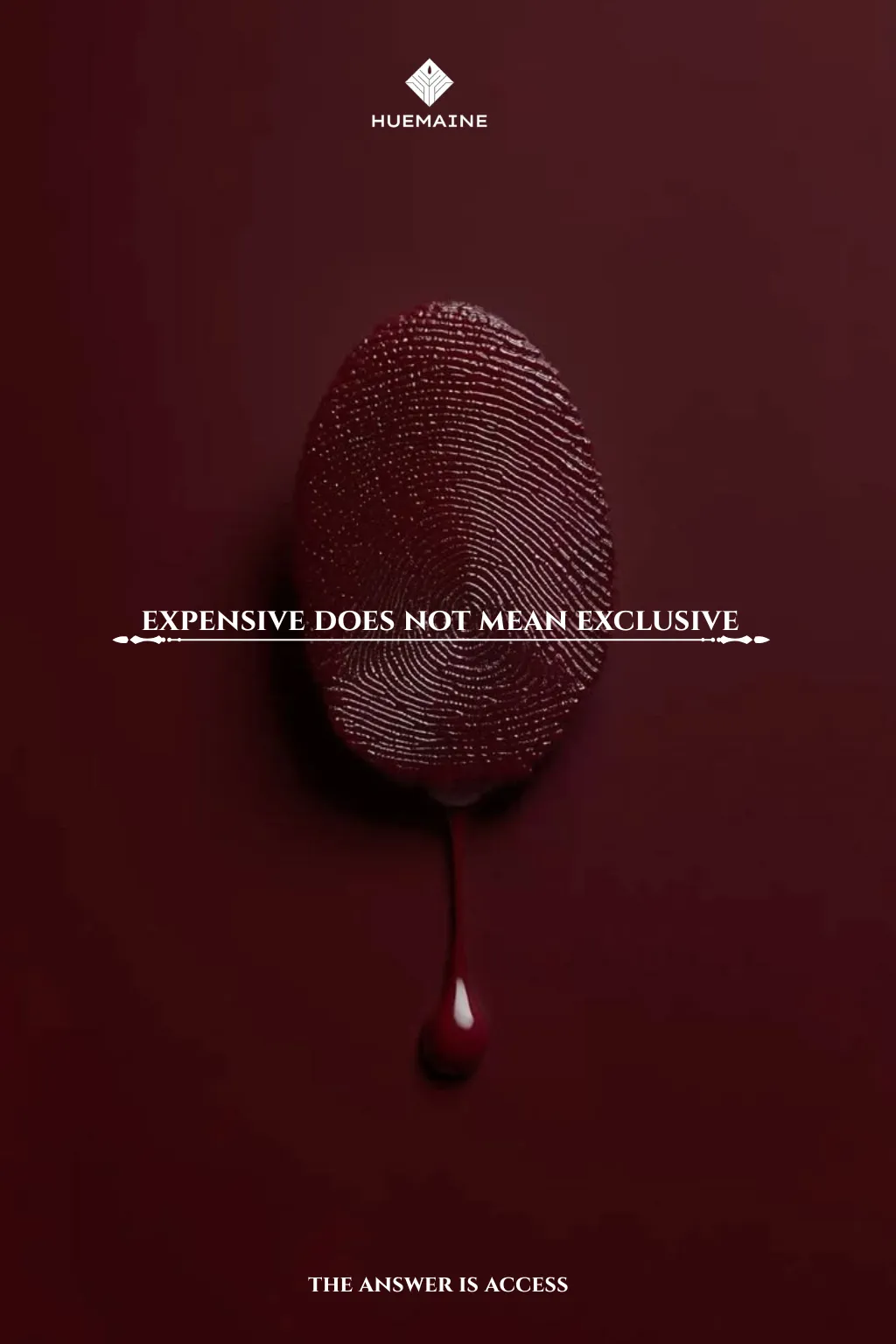
Expensive Does Not Mean Exclusive
There was a time when the price of something was enough to tell you what it was worth.
The more expensive the object, the fewer people could own it. The fewer people who could own it, the more desirable it became. Price created distance. Distance created status and status created luxury. However, that equation is beginning to break down.
Today, you can spend an extraordinary amount of money and still end up owning something thousands of other people own. You can walk into a luxury boutique, purchase the same bag, wear the same watch, book the same hotel and post the same experience as millions of consumers around the world. The price may be high.
But is it exclusive? Not necessarily.
This is one of the most interesting tensions facing luxury today: the difference between something being expensive and something being genuinely rare. At the end of the day , luxury was never really about price. Price was simply one of the mechanisms used to create scarcity.
And in a world where wealth is becoming more visible, luxury brands are becoming more accessible, and social media has made almost every desirable object instantly recognisable, price alone is losing some of its power as a status signal. The logo is visible. The product is familiar. The experience can be replicated. The aspiration has become mainstream. So what remains? Perhaps the answer is access.
There is a difference between being able to buy something and being able to access something that very few people can. A limited-edition piece created for a private client. An invitation to an event that never appears on a public calendar. A hotel experience designed around an individual rather than a room category. A relationship with a designer, artist, chef or craftsman that cannot be purchased through a website.
These things may not always be the most expensive but they can be far more exclusive. This is where luxury is beginning to move: from ownership to proximity.
Proximity to people, culture, craftsmanship. Proximity to experiences that cannot be mass-produced. The shift is particularly relevant in Africa, where luxury consumption is becoming increasingly sophisticated. As more consumers gain access to global luxury brands, simply owning an internationally recognised name becomes less distinctive. The conversation begins to move beyond what someone owns and towards whythey chose it.
Is it rare? Is it beautifully made? Does it have provenance? Is there a story behind it? Was it discovered before it became popular? Does it reflect personal taste rather than public validation? These questions reveal something important about the future of status.
When access to luxury expands, discernment becomes more valuable. The person with the most expensive wardrobe is not necessarily the person with the most interesting one. The most expensive restaurant is not necessarily the most memorable. The most famous hotel is not necessarily the most luxurious. The person wearing the most recognisable watch is not necessarily the person who understands watches. Luxury is increasingly becoming a question of knowledge. Knowing what to look for and what has substance. This is where taste becomes powerful.
Taste cannot simply be purchased at checkout. It is developed through exposure, curiosity, culture and experience. It allows a consumer to recognise value before the market tells them what to value. Perhaps that is why some of the most sophisticated luxury consumers are moving away from conspicuous consumption. Not because they cannot afford to be loud. Because they no longer need to be. The ultimate flex may not be owning something everyone recognises. It may be owning something almost nobody does.
That distinction matters for luxury brands too. The brands of tomorrow cannot rely solely on higher prices to create desirability. They will need to create worlds that consumers want access to. Communities that feel meaningful. Experiences that feel impossible to replicate. Products with provenance and stories strong enough to survive beyond a logo.
Because once everyone can afford the price of entry, the price stops being the barrier.
Access becomes the barrier.
And that may be the new definition of exclusivity. Luxury is not necessarily what costs the most. It is what cannot easily be replicated, accessed, understood or experienced by everyone. The future of luxury, then, may belong to the brands that understand one simple distinction:
Being expensive gets attention.
Being exclusive creates desire.
Nelo Okpala